Back to projectsRFID Asset Tracking South Africa

RFID asset tracking and linen visibility for South African operations

A practical tracking system for teams that need item visibility, checkpoint accountability, dashboard review, and cleaner exception handling without relying only on manual counts.

Sanitized RFID operations dashboard overview showing exception visibility and reader activity.
RFID
Tagged item visibility
Readers
Checkpoint workflow design
Exceptions
Operational follow-up

Built around real movement and accountability workflows

RFID tracking works best when the system is scoped around how items actually move through receiving, storage, issue, return, counting, and exception handling. The goal is not only to read tags. It is to make the operation easier to manage.

Useful where counting and traceability need to improve

Asset and linen operations benefit when teams can reduce manual counts, understand where items last moved, and identify gaps earlier. That is especially useful in environments where stock visibility and operational discipline need to improve across multiple checkpoints.

Dashboard visibility matters as much as tag reads

The system becomes more practical when operators can review counts, movement history, reader activity, and exceptions through one workflow. That makes it easier to act on the data instead of treating RFID as a disconnected scanning layer.

Dashboard Views

Operational visibility, not just tag reads.

The software layer matters because RFID is only useful when teams can review movement, investigate exceptions, and act on the live picture instead of reading isolated tag events one by one.

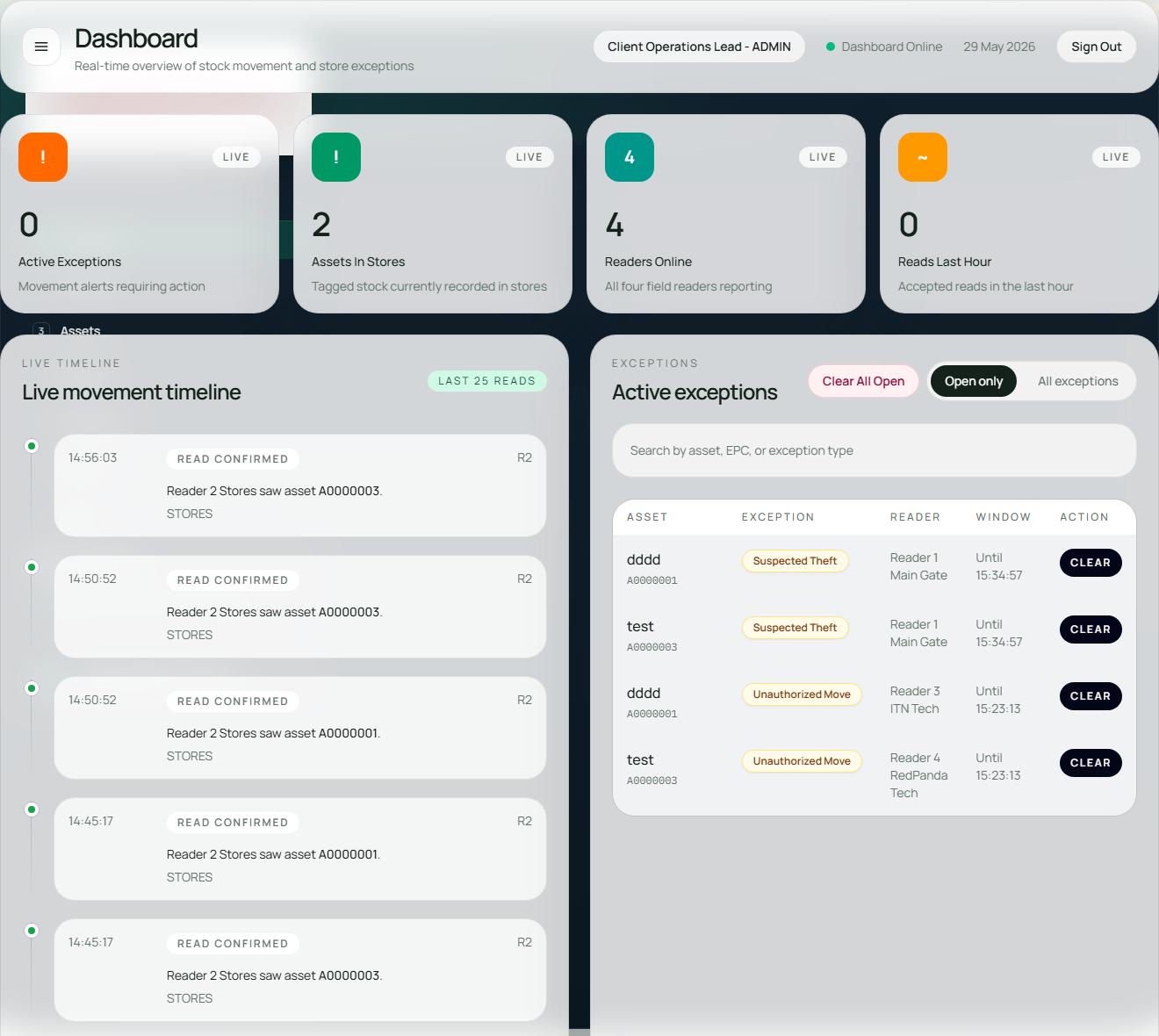
Sanitized RFID dashboard overview showing live movement timeline, reader status, and active exceptions.

Live operational dashboard

A shared dashboard gives operators one place to review exceptions, active readers, item movement, and the signals that need follow-up before they become stock issues.

Sanitized RFID dashboard summary cards showing exceptions, assets in stores, readers online, and recent reads.

Quick-read exception and health signals

Summary cards make it easier for supervisors and store teams to understand exceptions, item availability, reader health, and recent activity without working through a raw event log.

Buyer Questions

Straight answers for RFID tracking buyers.

What is the ExpandoWorks RFID tracking system used for?

It is used for asset and linen visibility, movement tracking, stock accountability, and operational exception handling where teams need a more reliable record than manual counting or spreadsheet-based control.

Can ExpandoWorks support both the hardware and the dashboard workflow?

Yes. ExpandoWorks supports the reader strategy, hardware delivery, operational dashboard workflow, and rollout support so the full RFID system can be shaped as one deployment.

Is this only for linen operations?

No. The same delivery model can support other asset-tracking and movement-visibility workflows where tags, readers, checkpoints, and exception management need to work together cleanly.

Planning an RFID rollout?

Share the workflow, item types, checkpoint layout, and visibility goals. ExpandoWorks can help shape a practical RFID tracking system around the real operation.